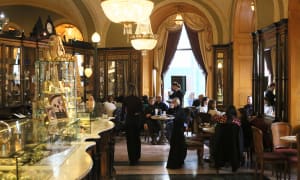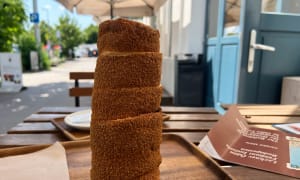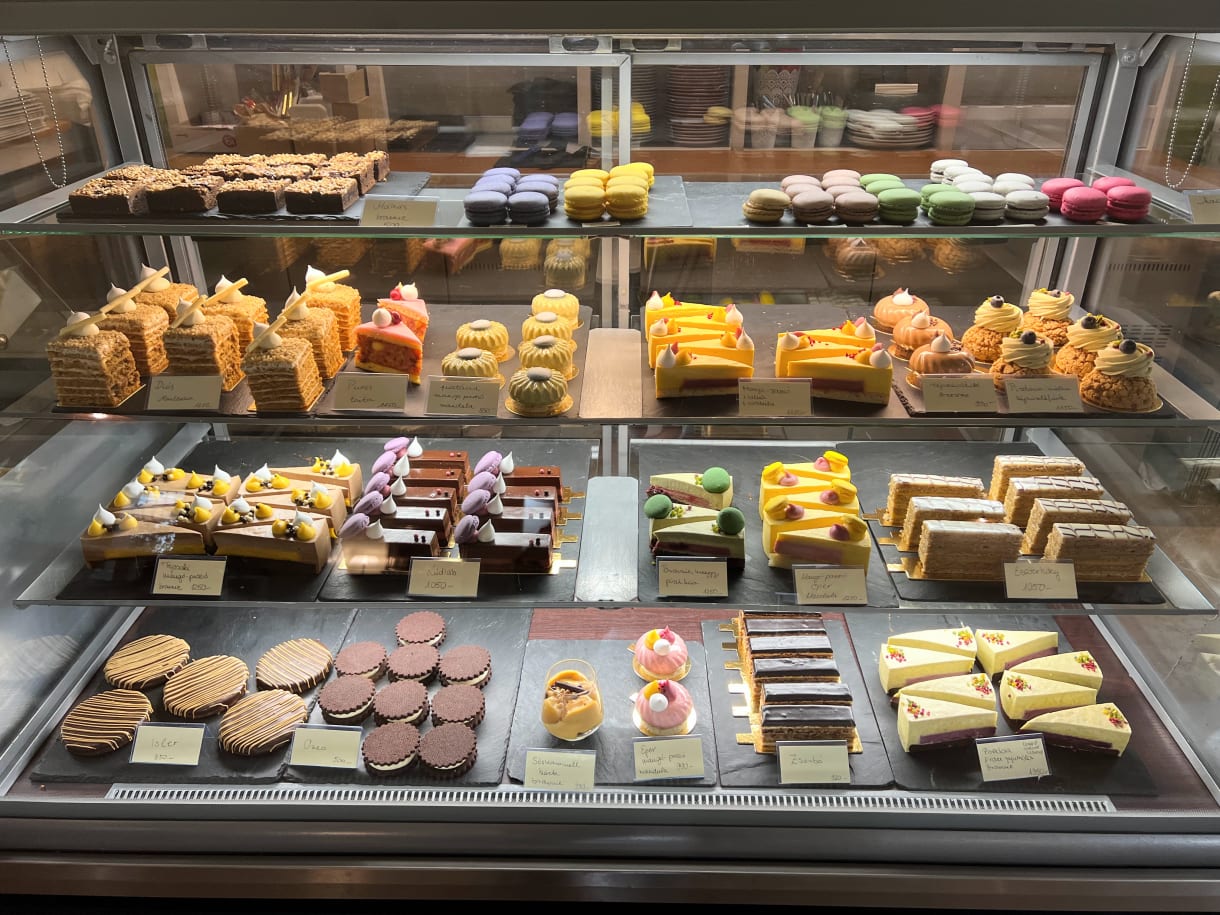
Before long, one will stumble into a pastry shop (cukrászda) in Budapest. The city's vibrant pastry culture harks back to the period of Austria-Hungary (1867-1918) when people socialized over luscious cakes and rich tortes. Many of the places below serve both traditional cakes such as Dobos and Esterházy and contemporary concoctions. Note that Cafe Gerbeaud is usually mobbed by tourists; the neighborhood favorites (Auguszt, Nándori, Sommer) will better convey a sense of place and won't be so crowded.

A true Budapest landmark, Auguszt is a family-run pastry shop dating back to 1870 and currently helmed by the fourth generation embodied by the 76-year-old József Auguszt, who mans the cashier on most days in his signature chef's hat. Already at the turn of the 20th century Auguszt was a pride of the Buda side, which was regularly dismissed as a conservative backwater compared with the dynamic Pest across the river. (Painted black and emblazoned with a golden logo, an elegant horse-drawn carriage made Auguszt deliveries until 1929, when it was replaced by a custom-built automobile.)
Auguszt has been through thick and thin – during the most repressive years of the Communist regime, in the early 1950s, the business was nationalized and the family deported to the Hungarian countryside. In 1957, they were granted a small space from which grew out the current premises.
Despite its long history, Auguszt doesn’t traffic in nostalgia. Few Budapest pastry shops can rival its quality and assortment, which includes all the classic cakes such as Dobos, Esterházy, krémes, flódni, as well as savory biscuits such as pogácsa, and modern concoctions. The marzipan layered sponge cake known as “E80” stands for Elemér Auguszt, for whose 80th birthday it was made in 1992. It became such a hit that now pastry shops across Budapest serve it.
The upstairs is reserved for sit-down customers; in the summer months they open up the outdoor garden. Prices are higher than elsewhere but so is the quality. (The Auguszt locations on the Pest side are run separately by another branch of the family in a similar manner.)