6 Historic Coffeehouses in Budapest

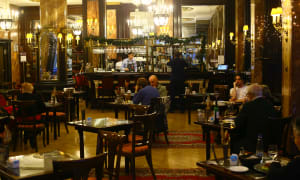
Similar to Vienna, Budapest enjoyed a thriving coffeehouse culture during Austria-Hungary – around the turn of the 20th century, more than 500 cafés swarmed across Budapest. Apart from low-priced caffeine, coffeehouses offered a home away from home to the city's fast-growing populace. Artists and journalists camped out for the whole day in these high-ceilinged establishments, even directing their mail to their favored café. Most coffeehouses have long since disappeared but a few are still around (or have reopened), drawing a tourist-heavy crowd. If you're curious about a contemporary Budapest "coffeehouse," drop by some of the specialty coffee shops too.
#1 Café Gerbeaud

Gerbeaud is a historic pastry shop and café in Budapest's downtown. It was the Swiss-Hungarian patissier Emil Gerbeaud, who, after taking over the business in 1884, revolutionized the Hungarian confectionery industry with inventive sweets and pastries.

Today, Gerbeaud is mainly a pricey tourist attraction, but it still puts out delicious traditional Austro-Hungarian pastries, such as Dobos, Esterházy, and Sacher tortes, krémes, and the namesake Gerbeaud cake. In addition, they have two signature treats: konyakmeggy, a brandied sour cherry bonbon enclosed by chocolate, and macskanyelv, a milk chocolate shaped like a cat’s tongue.

The inside is lavish with crystal chandeliers, marble-topped tables, and cherrywood paneling. Even during the Communist era (1947-1989), Gerbeaud remained a see-and-be-seen hangout for Budapest's upper crust (under national ownership and a less Western-sounding name: Vörösmarty Cukrászda). Part of the experience is basking in the historic glow of the space, but note that all to-go orders are half-priced.

#2 New York Café

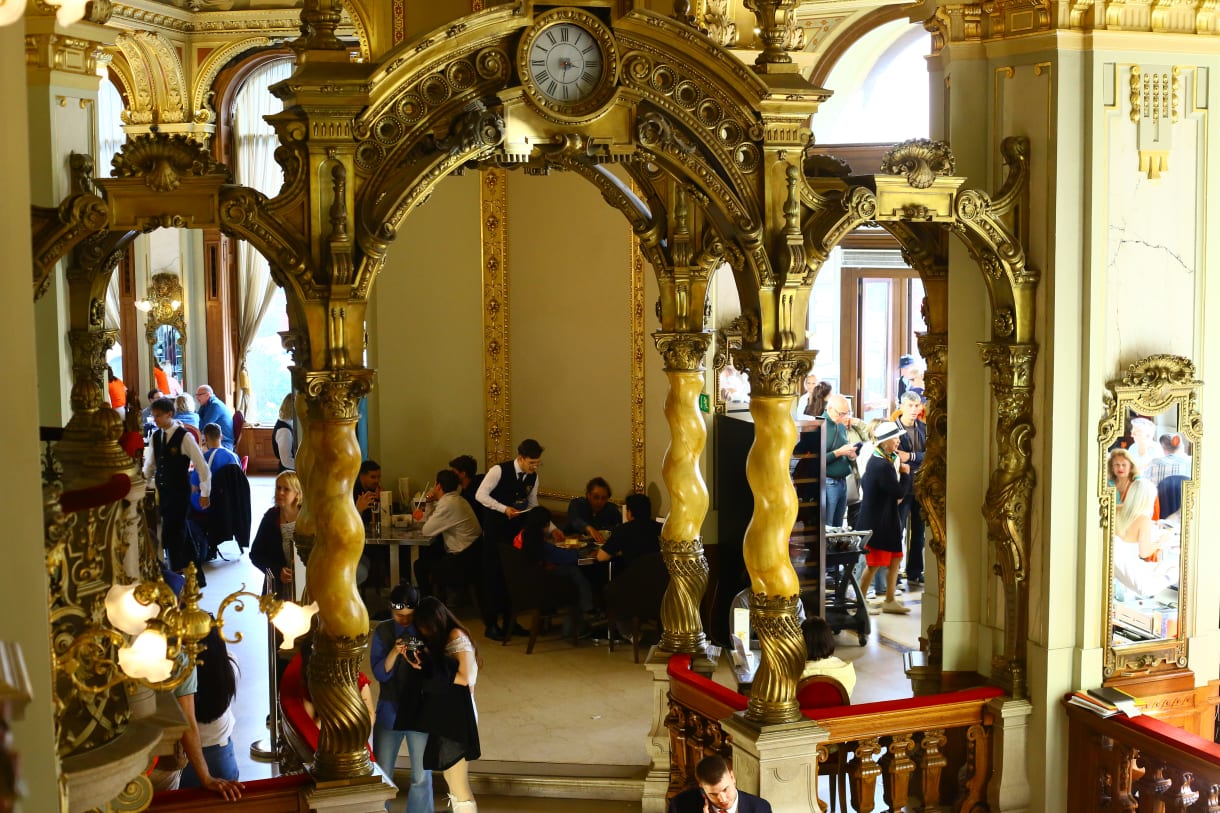
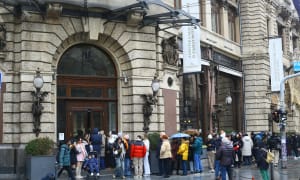
A tourist trap or not? A question raised by many people who consider visiting Budapest's New York Café. I can’t answer that for you, but I can lay out some facts. The New York Café has been a tourist attraction since the 1930s. It is surely the most spectacular coffeehouse in Budapest, if not the whole world, but also the kind of place where an hour-plus wait for a table isn't unusual and where a cup of cappuccino costs €11. Needless to say: most locals don't go near it.

The New York Café occupies the ground floor of the New York Palace, an imposing building along Budapest’s Grand Boulevard commissioned in 1894 by the New York Life Insurance Company to house its offices and rental apartments (today the five-star Anantara Hotel is upstairs).

The coffeehouse’s prime was the pre-WWI period, when renowned Hungarian journalists and writers such as Ferenc Molnár spent unruly nights here under the sky-high ceiling. The place continued to operate as a coffeehouse for much of the Communist period, although with a less western-sounding name (“Hungária”).

After a 2006 gut-renovation, the New York Café has regained its completely unbridled interior, featuring ceiling paintings, bronze statues, gilded putti, and heavy chandeliers. I’m pretty sure it’s the only coffeehouse with Solomonic marble columns and a Bernini-esque baldachin.

As with other major tourist attractions, prices are absurdly high and the food – Hungarian and Habsburg classics – solid but far from memorable. Every day, a Gypsy band plays live music for fifteen minutes between 11 a.m. and 5 p.m.

All this to say: the New York Café isn’t a classic tourist trap and if you are a Baroque fan like me or after an unusual selfie, then you should probably get in that line. Otherwise, save your time and money and go someplace else. For example, my beloved Cafe Astoria.

#3 Centrál Cafe

Centrál is one of the few remaining coffeehouses dating back to Budapest’s golden era before WWI. At the time, the city was swarming with elegant cafés such as Centrál where people spent endless caffeine-fueled hours working and socializing under the sky-high ceilings (today, one of Central's walls is blanketed in framed photos of writers, poets, and editors who were once regulars).

Centrál didn't escape Budapest’s tragic post-war history – nationalization, decay, closure; although the new venue played an important role in the dissemination of rock and roll music in 1960s Communist Hungary. In 2000, Centrál was restored to its former glory. The place wears many hats these days, but it is best known for its grand interior, breakfast all-day offerings, and delicious homemade pastries (Esterházy! Dobos! Pistachio cake!).

#4 Café Astoria

Budapest’s oldest hotel, the Astoria (1914), has been a close witness of history: the short-lived first Hungarian Republic was proclaimed from its balcony in 1918; the Gestapo headquartered here during the occupation by Nazi Germany in 1944-1945; the Revolution of 1956 nearly knocked down the building. Thou glorious 20th century.

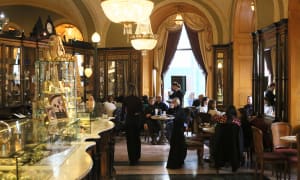
There's a grand coffeehouse on the hotel's ground floor with public access. In our age of all things sleek and polished, the lavish and gilded interior can feel like a breath of fresh air. So many details to take in! The Borromini-esque ceiling stuccoes. The Baroque mirror frames. The giant windows that snake around the block (a pity they overlook a five-lane highway – or is it six? – instead of the people-filled promenade Kossuth Lajos utca once was). The longtime waiters and their adorably uncommercial attitudes. It's a miracle that Cafe Astoria hasn't yet morphed into a squeaky clean cash-cow. Enjoy while you can.

#5 Három Holló

Budapest has excellent specialty coffee shops but its historical coffeehouses have vanished or become pricey tourist attractions to which locals rarely go. But I’m here to report that Három Holló, which opened in 2017, has begun to fill this gaping void and so appeared marble-topped tables, Thonet chairs, multilingual papers and magazines under the soaring ceiling. It didn’t hurt that the cafe’s enormous windows overlook downtown’s Elizabeth Bridge, the Gellért Hill, and the neighboring Gothic cathedral.

Today, Három Holló is a lively hub for culturally minded locals of all ages. The affordable menu features pretzels, toasted sandwiches, Frankfurters, vegetarian lunch specials, and Kaiserschmarrn shredded pancakes. Every evening, there’s a music concert or a book event in the below-ground auditorium. As all self-respecting coffeehouses, Három Holló is open until midnight every day of the week.

#6 Gerlóczy Cafe

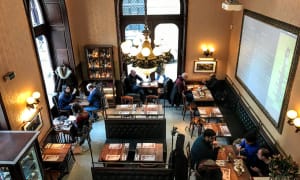
Opened in 2004, Gerlóczy is a snug café and restaurant located in a quiet pocket of Budapest's downtown. Gerlóczy evokes a historical coffeehouse with a soaring interior, round tables ringed by leather banquettes, and formally dressed servers. Both the breakfast and the dinner menu feature reliable French classics alongside a few Hungarian staples such as chicken paprikash. Gerlóczy is most enjoyable in the warm months, when the action spills out to the terrace, presided over by the bronze statue of Károly Kamermayer, the first mayor of the combined cities of Buda and Pest (from 1873 to 1896). Note that Gerlóczy operates a boutique hotel on the upstairs levels.

I visit all places incognito and pay for my own meals and drinks. I rely in large part on readers to support my work. I'm grateful if you make a one-time payment (PayPal, Venmo, Revolut) or subscribe to my weekly newsletter in which I write about Budapest and Vienna.