Budapest's Seven Michelin-Starred Restaurants In 2026

Budapest has seven Michelin-awarded restaurants currently. Here, you can also find the city's full list of fine dining establishments.

#1 Babel Budapest

Babel is a Michelin-starred fine dining restaurant in the heart of Budapest. The hushed, casually elegant dining room has only a dozen tables, set with white linen and overlooking the neighboring Gothic cathedral bathed in soft light (the Danube is just a stone's throw away).

The day-to-day kitchen duties are carried out by a quintet of chefs under Kornél Kaszás. The 8 and the 13-course tasting menus draw inspiration from Austro-Hungarian cuisine but the kitchen chases purity of flavors rather than a complete loyalty to traditional dishes or ingredients. Yes, there's black caviar, foie gras, and truffles, but also fine dining takes on local classics such as layered potatoes and túró-filled donuts, beautifully plated and delicious. The service staff is kind and competent – no matter how mundane or technical your question, they'll likely have answers for you. In addition to an all-Hungarian wine pairing list, there's also a fun selection featuring local craft beer, plum-infused sake, Normandy cider, and an idiosyncratic Tokaj szamorodni.

The 13-course menu runs €170 per person or €260 with wine pairing. The dining experience at Babel is emphatically two-star, despite the restaurant having only one Michelin star currently.
#2 Borkonyha (Winekitchen) Restaurant

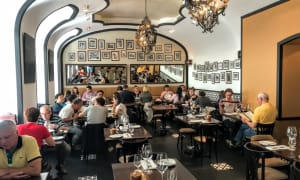
Borkonyha is a Michelin-starred restaurant in Budapest's downtown. Instead of a special emphasis on Hungarian food, the dishes here wouldn't seem out of place in fine dining restaurants around the world. Borkonyha's secret lies in its technical expertise: they serve up colorful, visually impressive plates that verge on the artistic. What does lend a local angle are the more than 200 types of Hungarian wines skillfully selected by Wine Director Krisztián Juhász.

The foie gras anointed with Tokaj aszú is Borkonyha's signature dish, on the menu since the 2010 opening. The luscious duck liver boasts a creamy texture and a paper-thin, crackly crust. The mains are a collection of prized meats beautifully plated with seasonal vegetables. Think rack of lamb, Mangalica pork, and wagyu beef.

With €30-40 mains, Borkonyha is among the most expensive restaurants in Budapest, but one with a relatively laid-back, bistro-like atmosphere. Advance reservation is a must.

#3 Stand Restaurant

Stand Restaurant is the fine dining project of local celebrity chef-duo, Szabina Szulló and Tamás Széll, and follows the success of Stand25, their acclaimed restaurant on the Buda side. Here too, their success was almost immediate: accolades quickly poured in, and the restaurant won two Michelin stars in 2022, within a few years of opening.

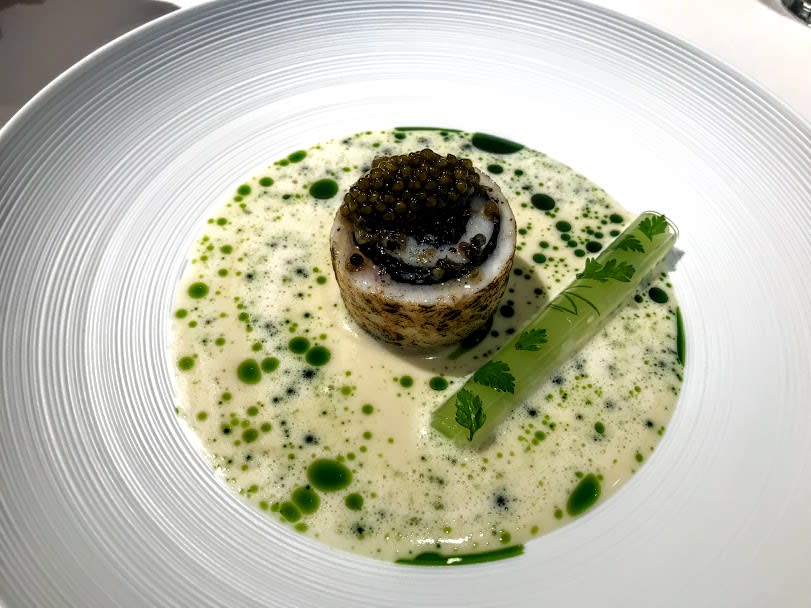
It is the updated Hungarian classics that stand out from the eight-course tasting menu. It may be a fish soup, a traditional Danubian peasant fare, served in a paprika-laced broth and drizzled with tortellini-like envelopes stuffed with smoked carp. The most striking dish is the sterlet, a small species of sturgeon; the delicately rolled-up fish is topped with roe and drenched in a luscious clam sauce. One can observe the meticulous prep work that goes into these elaborate plates through the open kitchen where an army of cooks scuttle about.

The eight-course dinner tasting menu will set you back €230 per person (€400 if you opt for wine pairing). The wine program, overseen by head-sommelier János Gervai who is a winemaker himself, features bottles from the major Hungarian wine regions.

#4 Essência Restaurant

Essência is the project of the Portuguese-Hungarian husband and wife duo, Tiago and Éva Sabarigo. Before venturing out on their own, Tiago was head chef at another Michelin decorated establishment, Costes Downtown, while Éva came from the hospitality industry. Essência is a casual fine dining restaurant: the high-ceilinged hall features exposed brick walls, plush mid-century modern furniture, and bare wooden tables.

The five or seven-course tasting menu, “May 17th,” bears their daughter’s birthdate and features dishes from both countries, with a focus on fish-forward Portuguese fare. Highlights include the creamy foie gras, a traditional produce of Hungary, the grilled octopus atop a bed of chorizo-infused toast, the deceptively simple-sounding filet of cod, and the desserts: a rich Portuguese caramel pudding and a play on a Hungarian poppy-seeds pastry called mákos guba. The seven-course tasting menu costs €125 per person (€200 with wine pairing). As with the food, the wines are sourced from excellent Hungarian and Portuguese producers.

Tiago Sabarigo is a technical chef firmly in control of ingredients, combinations, sauces, and plating, but there's room for more creativity when it comes to assembling the menu. The servers, including the sommelier, are remarkably knowledgeable and kind.

#5 Salt Budapest

If you think the restaurant fashion of all things foraged, pickled, and fermented has run its course, think again. Currently, one of the most popular restaurants among Hungarian diners is Salt, a downtown establishment that plays so skillfully from the Noma playbook that it even earned a star from Michelin in 2021.

Bright flavors are the throughline of Chef Szilárd Tóth's 15-course dinner tasting menu, which costs €170 per person (€260 with wine pairing). Some of the ingredients are truly remarkable, such as the deeply flavorful aged mangalica ham and the koji-fermented barley crepe, which serves as a vessel for a tender goat meat tartar. But as I ate my way through the beautifully composed bite-sized courses adorned with rare flowers and herbs sourced by the kitchen staff, I felt wishing for more rounded flavors and buttery richness. And a bit more food. It's a tired cliche that fine dining meals leave one hungry, but I did toss a slice of bread in the toaster at home.

The wine list features both top Hungarian producers such as Oremus and Sauska, and also less-known family winemakers such as Szóló that specialize in natural wines. The service team is friendly and informed.

#6 Rumour by Rácz Jenő

Before settling into a fine dining meal at Rumour, you’ll need to find the restaurant, a surprisingly challenging task (look for the pastry shop through which the entrance leads). The venue: a windowless high-ceilinged room draped in maroon curtains. The concept: chef’s table, meaning that two dozen or so diners per evening are seated on high chairs in a half moon, cradling the open kitchen where an army of cooks labors with tweezers in hand.

Instead of the fashionable Noma-style locavorism, Rumour's dishes are rooted in the classical French and the science-obsessed modernist gastronomy of the early aughts (some hat tips to Hungary do exist, as with the walnut and buttercream spiked Esterházy torte). Think pockets of kohlrabi ravioli stuffed with creamy scallops in a paradise of textures, colors, and shapes. Charred cauliflower sitting in a rich hollandaise sauce, dotted with fermented and soy-sauce-marinated shimeji mushrooms and drizzled with aged beef, grated table-side. Perfectly executed, technically brilliant plates, one after the other.

Unlike with other fine dining restaurants in Budapest, the guests here are mainly Hungarian because the head chef, Jenő Rácz, is a local celebrity with a TV show. There’s a six-course “pre-theater” tasting menu starting at 5:30 pm (€100 per person, or €170 with wine pairing), and a nine-course meal at 8:00 pm, for €170 per person (€240 with wine). Rumour has one Michelin star currently, but the dining experience is emphatically two-star.

#7 Costes Restaurant (Ráday Street)

In 2010, Costes Ráday was the first restaurant in Hungary to earn a Michelin star, but many chefs have come and gone, and many fine dining places have sprouted in Budapest since then. Costes's current conceit is a hard-to-define collection of seven courses inspired by the techniques of French fine dining traditions. Some are very tasty (slices of celery root molded in the shape of a ravioli and filled with a flavorful spread of stracciatella cheese and smoked eggplant), but on recent visits I often felt that more than a dozen years after its opening, Costes is due for a revamp.

Both the dark interior, which brings to mind, unironically, the idea of luxury across post-Communist countries in the 1990s, and the unfocused culinary direction. Fine dining has evolved in ways that Costes has not – service teams tend to be more casual but better informed these days, for example. Note that Costes Ráday has a sister location in downtown (Costes Downtown), also fine dining, but with a more casual air.

I visit all places incognito and pay for my own meals and drinks. I rely in large part on readers to support my work. I'm grateful if you make a one-time payment (PayPal, Venmo, Revolut) or subscribe to my weekly newsletter in which I write about Budapest and Vienna.