 11
11Bambi Eszpresszó
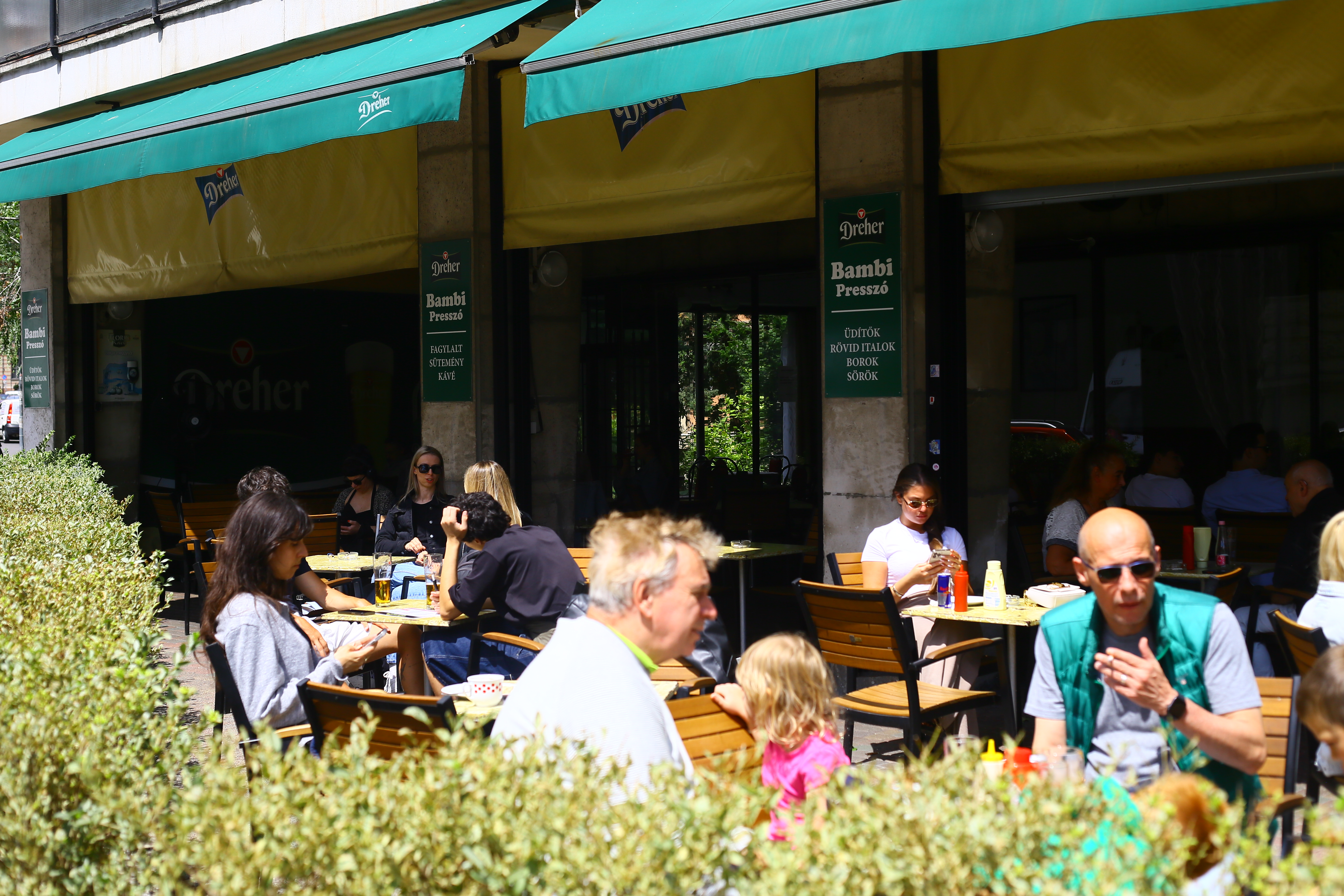
When I meet people for coffee or a drink, I often find myself at Bambi Eszpresszó on the Buda side. It would be a misnomer to call Bambi “legendary” because Bambi defies these kinds of categorizations – Bambi is a given, a fixture, a native element in the life of the city, kind of like the Danube River which drift by a stone’s throw away from Bambi’s spacious terrace.
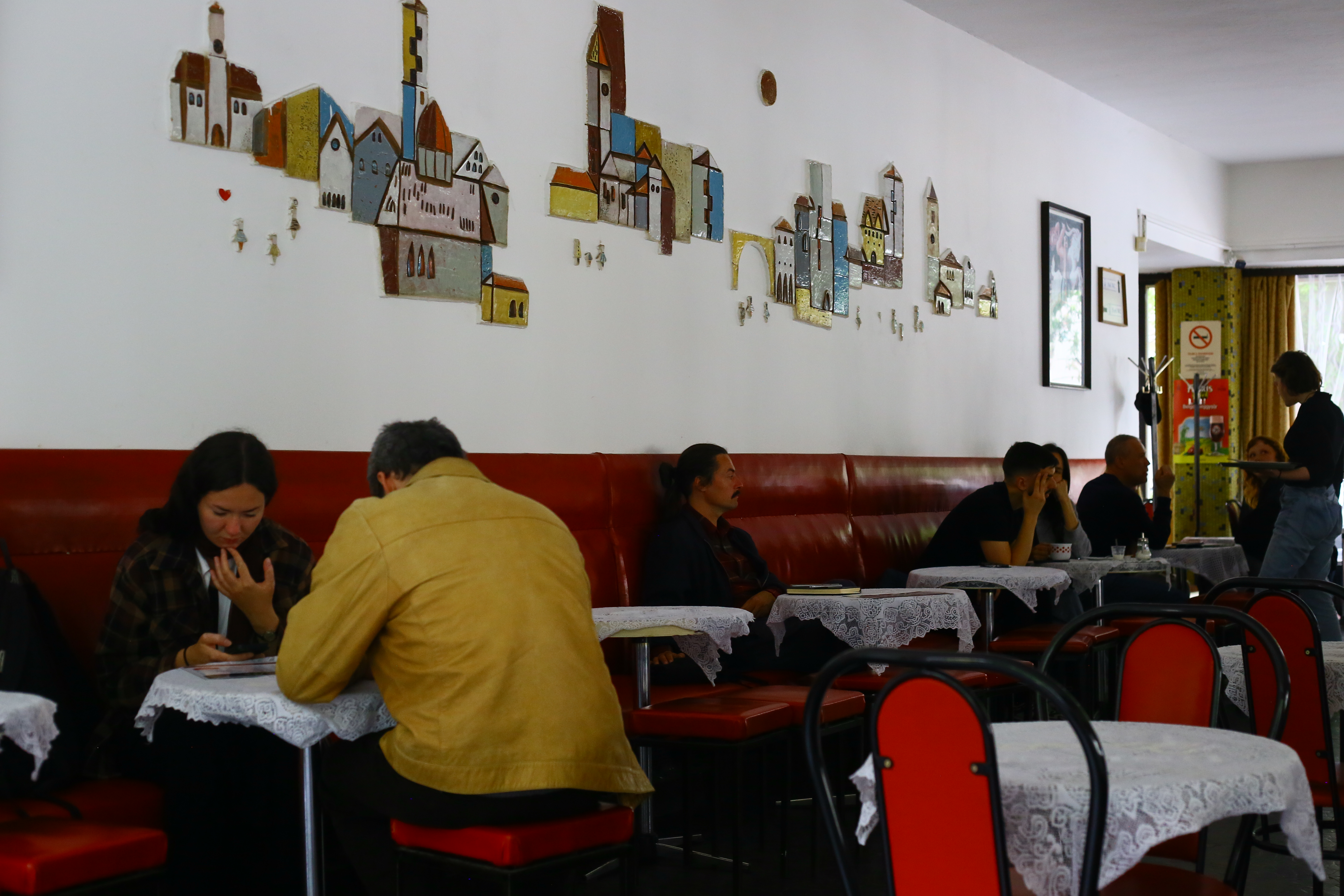
Not much has changed here since the 1961 opening. The socialist modern furnishings are still in place: the small metal tables; the stools; the long banquette upholstered with red faux-leather; the “ceramic city” decoration on the wall.
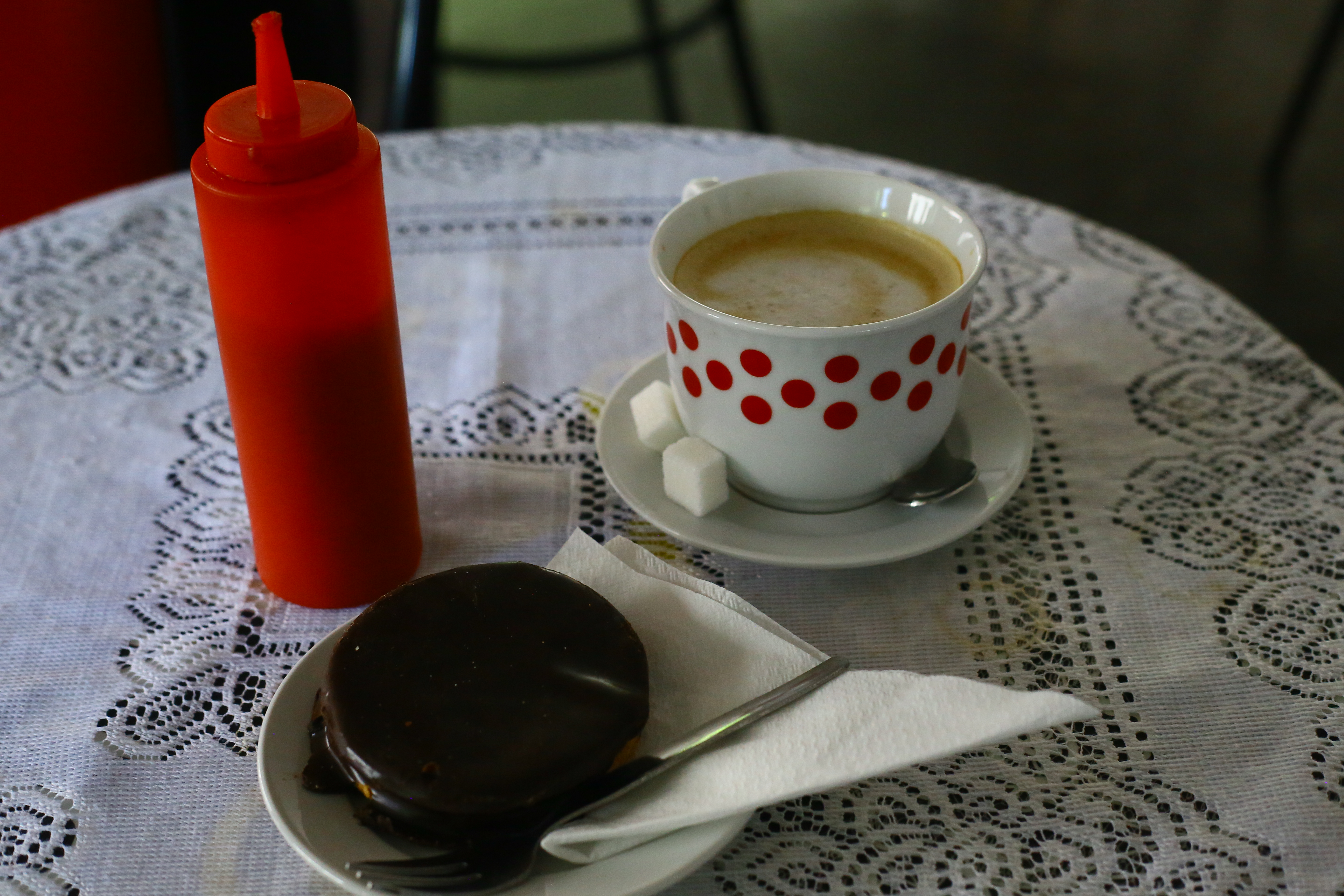
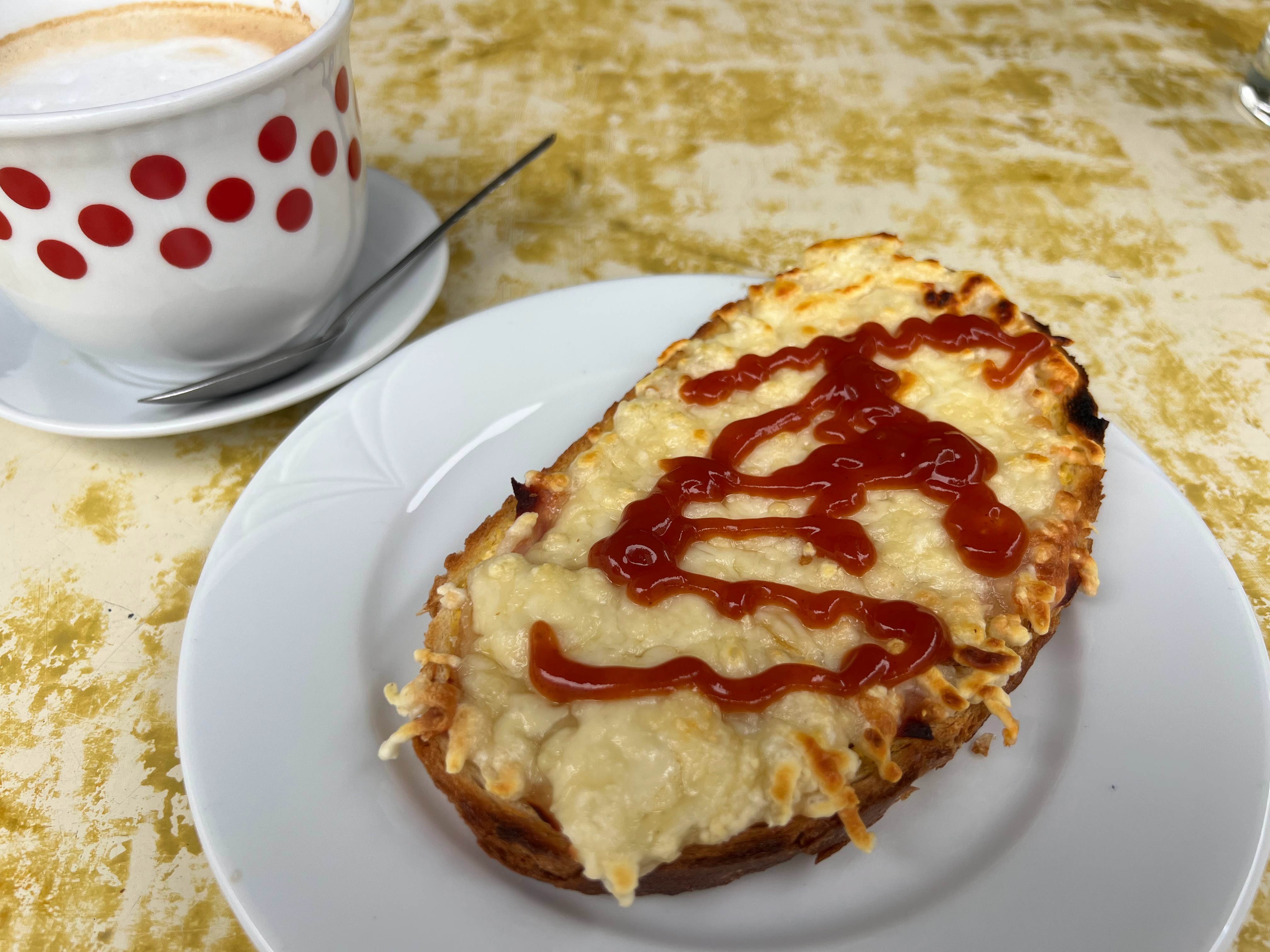
My standard order is an omelet, a toasted sandwich, perhaps an isler cake, and surely a milk coffee (tejeskávé), the latter served in a child-friendly white mug emblazoned with red dots. The waiters are known to be practical with an emphatic “the customer is not always right” approach.
A glance at the nearby tables reveals that the Unicum-and-beer combo is also favored around here, especially among older customers. Not that they are the majority. Plenty of Millennials and Gen Z-ers frequent Bambi for a travel back in time without the artifice that often plagues intentionally retro establishments (the no-wifi policy feels deeply authentic).
Fans of architecture should take note of the seven-story building whose ground floor Bambi occupies. Designed in 1957 by a woman architect, Olga Mináry, its modernist facade features spacious Danube-facing loggias.
Despite its popularity, Bambi has remained affordable and – on its own terms – welcoming. On warm days, I like to linger on the terrace as the sun makes its way across the river and a comforting background noise fills the air. One more tejeskávé, please.
To remain unbiased, I visit all places incognito and pay for my own meals and drinks. I rely in large part on readers to support my work. I'm grateful if you make a one-time payment (PayPal, Venmo, Revolut) or subscribe to my weekly newsletter in which I write about Budapest and Vienna.